Three Plans for taking Lawns to Gardens
Inspiring ways to transform your lawn into a thriving garden space
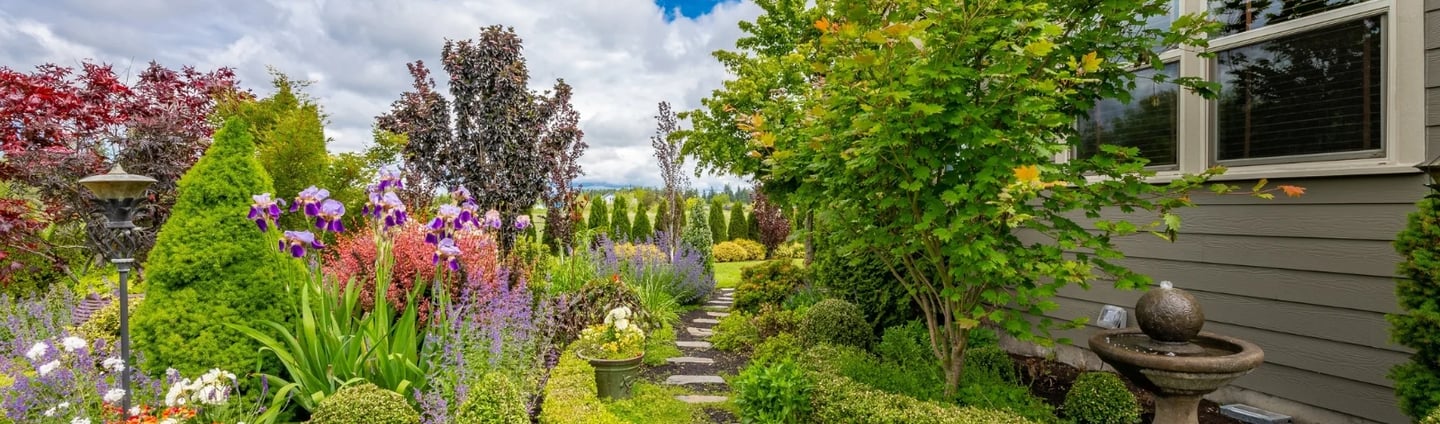
Lawns to Gardens
Transform ordinary lawns into productive, environmentally beneficial landscapes.
Start by Prepping Your Planting Area
Option 1: Sheet Mulching (Recommended)
This is the easiest method and causes the least soil disturbance.
Materials
Burlap (cardboard can have some chemical byproducts)
Compost
Topsoil
Mulch
Steps
Mow existing grass as short as possible.
Water the area thoroughly.
Cover the grass with overlapping cardboard or burlap.
Wet the material thoroughly.
Add 2–4 inches of compost or amended topsoil.
Add mulch if desired.
Plant directly into the new soil layer.
Benefits
Preserves soil biology
Reduces weed pressure
Retains moisture
Requires less labor
Option 2: Traditional Bed Preparation
Suitable when immediate planting depth is needed.
Steps
Remove sod, grass & weeds.
Loosen compacted soil.
Perform a soil test if possible, see our free soil test guide.
Add compost and necessary amendments, if help is needed email our support team.
Rake smooth and prepare planting areas.
Mulch after planting.
Benefits
Immediate access to native soil
Easier for some root crops
Allows correction of soil issues found through testing
Plan 1: Front Yard Pollinator Garden
Goal: Create a beautiful landscape that supports bees, butterflies, hummingbirds, and other beneficial insects.
Recommended Size: 100–300 square feet
Planting Strategy
Tall Plants (Back)
Native sunflowers
Joe-Pye weed
Goldenrod
Medium Plants (Middle)
Coneflower
Black-eyed Susan
Bee balm
Low Plants (Front)
Coreopsis
Native asters
Creeping phlox
Benefits
Supports pollinators
Reduces lawn maintenance
Improves neighborhood appearance
Increases biodiversity
Plan 2: Side-Yard Herb Garden
Goal: Provide fresh culinary and medicinal herbs close to the home.
Recommended Size: 50–150 square feet
Plant List
Basil (tall)
Mint (tall need containment)
Rosemary (very tall)
Sage (tall)
Oregano
Thyme
Chives
Design Tips
Place the tallest herbs toward the back.
Allow pathways for harvesting.
Add mulch to reduce weeds.
Position near kitchen access if possible.
Benefits
Fresh herbs year-round in many climates
Supports pollinators
Reduces grocery costs
Notes: Ensure your planting area gets plenty of sunlight for these sun loving herbs!
Plan 3: Backyard Food Guild
Goal: Create a small self-supporting food-producing ecosystem.
Recommended Size: 10–20 foot diameter circle


Center Plant (Choose dwarf variety for small yards)
Choose one:
Apple tree
Pear tree
Peach tree
Mulberry tree (these grow fast and have many uses)
Supporting Plants
Nitrogen Support
Clover
Vetch
Pollinator Plants
Bee balm
Echinacea
Dynamic Accumulators
Comfrey
Ground Cover
Strawberries
Sweet potato (warm climates)
Mulch Ring
Wood chips (aged for at least 6 months) surrounding the entire guild.
Benefits
Produces food
Supports pollinators
Builds soil
The Earth Care Approach
Every lawn converted into a productive landscape creates new habitat, improves soil health, increases biodiversity, and reduces dependence on resource-intensive maintenance.
Need more help?
Use this form to get answers fast
Global Earth Care Network
Earth Care Support
email: connect@earthcarenetwork.org
© 2026. All rights reserved.